Emergency Services Show 2025 Recap: Connectivity Insights from Birmingham, UK
Recap of the 2025 Emergency Services Show: Key insights into connectivity innovations for emergency responders, featuring the launch of Peplink's...
4 min read
.png)
Disaster relief depends on quick decision-making and action response. When there is no room for error, first responders must rely on their communications being aligned and uninterrupted. Resilient communications provide continuous coverage, even in remote or disaster-affected regions, ensuring that critical information flows without interruption.
The Foundations of Global Communications for Emergency Response
Satellite-enabled communications and connectivity solutions are indispensable tools supporting first responders. Fixed communication systems - such as fibre-optic cables or cellular networks tied to stationary cell towers - are immobile and therefore vulnerable when infrastructure is damaged. Because of this vulnerability, even though first responders often use cellular networks for voice and video communication, global disaster-relief efforts rely on mobile networks that can be deployed quickly and are far less likely to be disrupted. These include:
SATCOM: Satellites send and receive signals in orbit outside of the Earth’s atmosphere, so they are not susceptible to the damage wrought by natural disasters. SATCOM links remain operational even when hurricanes, wildfires, floods, or other large-scale events compromise terrestrial networks, ensuring continuity of critical communications.
Radio: Radio communication systems support reliable long-range connectivity for teams operating in remote or infrastructure-limited environments. They can be rapidly deployed, require minimal supporting equipment, and maintain performance under extreme weather conditions, making them well-suited for mission-critical field operations.
Hybrid: Using a combination of cellular systems with satellite and radio leverages the strengths of each system while mitigating their weaknesses. Using cellular networks for situational awareness paired with satellite and radio technology ensures a strong backbone, reducing the possibility of a failover. Interoperable communications are the key to successful mission-critical operations for emergency responders.
Emergency Communication Systems for First Responders
Firefighters, medics, and search-and-rescue teams rely on communication tools that ensure safe and coordinated fieldwork. Mobile Data Terminals connected to cellular routers (such as Peplink) installed in emergency vehicles give responders instant access to critical resources like building layouts, medical records, and hazardous material databases. At Network Innovations, our mission is to strengthen emergency response efforts during disasters by delivering solutions that remain reliable. These include:
International Disaster Response and Cross-Border Coordination
Continuous communications, such as satcom on-the-move (SOTM) technology, allow NGOs, military, and government agencies to communicate with their teams across borders during disasters. For vehicles on land, vessels, and aircraft, resilient connectivity is key in order to operate successful rescue missions.
When crews are operating in a dangerous location, strong and consistent communication is essential. Combining Starlink’s satellite with Peplink’s technology prevented a failover for crews onboard an offshore vessel. Read how they achieved robust connectivity so that they could stay in sync with the head office as if they were onshore, remaining focused on the work at hand:
.png?width=1500&height=500&name=Case%20Study%20-%20Blog%20Banner%20(1).png)
How Satellite Connectivity Supports Disaster Recovery Communications
Satellite connectivity is a pivotal part of disaster recovery. With it, teams can focus on their tasks at hand without the concern of downtime. While disasters themselves are unpredictable, preparedness can be controlled. The PACE (Primary, Alternate, Contingency, and Emergency) Plan is a useful tool designed to ensure that no matter the situation, connectivity stays consistent. Using the PACE plan, crews can take advantage of:
Overcoming Challenges: Interoperability and Network Resilience
During disasters, crews and headquarters must share information across multiple platforms. Satellite communications enable seamless interoperability for voice, video, and data, while also providing resilience when terrestrial infrastructure, such as cell towers, is damaged. This ensures continuity of operations and coordinated response efforts in even the most challenging environments.
Without a robust satellite network, operations risk incompatible systems, damaged infrastructure, and spectrum incoordination. At Network Innovations, we provide an interoperable satellite network that maintains reliable communications across diverse terrains and severe weather conditions.
Future Innovations in Disaster Management Communications
As technology evolves, humanitarian responses are becoming more efficient – saving lives faster than ever. Upcoming trends such as AI-driven situational awareness, IoT (Internet of Things) disaster sensors, and next-generation LEO (Low Earth Orbit) satellites are paving the way for enhanced rescue missions.
Interoperability between these three advancements provide for a future-ready approach to disaster management communications, enabling resilient, real-time decision-making even when traditional infrastructure fails.
Can satellites still communicate if a disaster knocks out electricity?
Yes. Because satellites operate independently of local power grids, they remain functional. Field teams can power terminals using portable generators or batteries to maintain connectivity.
What happens if multiple satellites fail at once?
Redundant satellite constellations, hybrid networks, and PACE planning ensure continuity even if individual satellites or ground stations are compromised.
Can extreme weather affect satellite signals?
Severe rain or storms can sometimes cause signal attenuation (“rain fade”), but modern terminals, adaptive coding, and multi-band satellites minimize these impacts.
How quickly can a remote village gain internet via satellite after a disaster?
With VSAT or portable terminals, basic connectivity can be established in hours, even in areas with no pre-existing infrastructure.
Can satellites be hacked or intercepted during disaster operations?
While no system is 100% immune, advanced encryption, frequency hopping, and secure network protocols make satellite communications highly resilient against cyber threats.
Do satellites work in polar regions or deep forests?
Yes. Some LEO and MEO constellations offer near-global coverage, including polar regions, and portable terminals can be set up even in dense forests with line-of-sight to the sky.
Are there limits to how many users can share a satellite network simultaneously?
Capacity depends on bandwidth and satellite type, but networks can be scaled with additional transponders, hybrid routing, or dynamic allocation to support large teams.
Get in touch with a member of our team today and explore global communications designed for disaster relief.
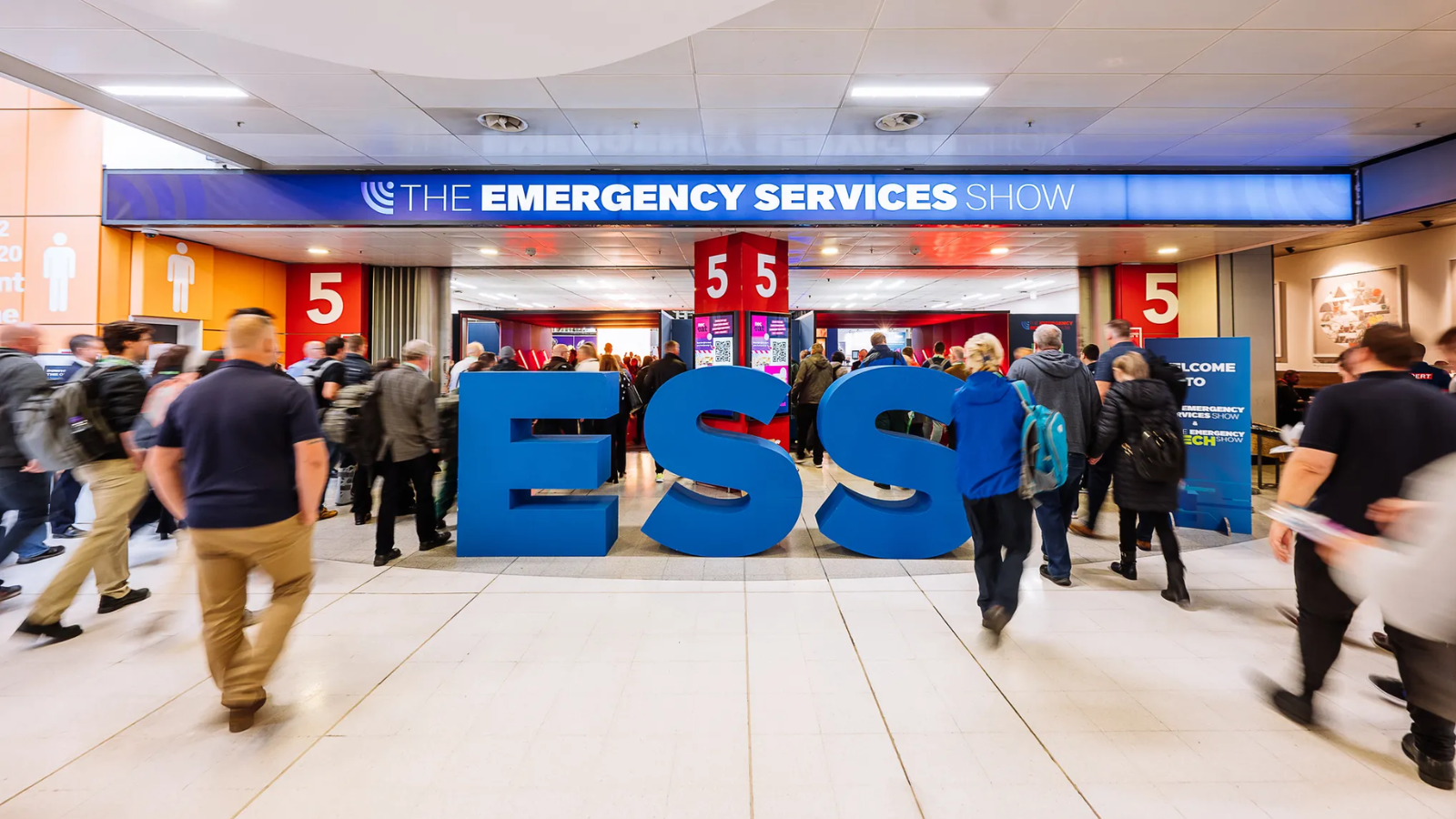
Recap of the 2025 Emergency Services Show: Key insights into connectivity innovations for emergency responders, featuring the launch of Peplink's...

Resilient networks are the backbone of mission success. When operations are mobile, secure connectivity empowers teams to act quickly and coordinate...
.png)
In a world where every second counts, modern emergency communication systems are the backbone of public safety, ensuring rapid response and...